Tools Introduction Class
Tools Feature & Advantage Introduction Class
Tools Operation and Application Class
Tools Maintanence and Repair Class
Tools Quality Checking and Certified Class
Tools Torque Introduction
Marketing Service Area
Member post
How to Choose a Ratchet Wrench: Tooth Count, Quick-Release, Head Design, and Size — 4 Key Points Explained
Popularity : 21They′re all ratchet wrenches — so why do you see 24-tooth, 32-tooth, 45-tooth, 72-tooth, and 90-tooth versions, plus quick-release, universal joint, swivel round head, and mini designs on top of that?
When picking a ratchet, the first thing most people notice is the tooth count.
But in real use, tooth count is only one factor among several.
If you′re constantly swapping sockets, working at an awkward angle, or don′t have much room for the whole tool to move, all of that can affect how well a ratchet actually works for you.
So when choosing a ratchet wrench, start by checking these 4 things:
- How much room does the handle have to swing back and forth?
- Will you be swapping sockets often on this job?
- Is the angle at the work position easy to get at?
- Does the whole tool actually have enough clearance to move?
1 | Tight on Working Space? Start With Tooth Count
Tooth count directly determines how far you need to swing the handle each time.
One full turn is 360°, so the more teeth a ratchet has, the smaller the angle each tooth covers.
For example:
- 24-tooth: about 15°
- 72-tooth: about 5°
- 90-tooth: about 4°
In other words, when space around you is tight and you can′t swing the handle very far, a higher tooth count lets you advance to the next ratchet position with a smaller motion.
On the flip side, if you′re working somewhere wide open where the handle can move freely, you don′t necessarily need to reach for a high tooth count just for its own sake.
So the simple way to think about it:
More teeth means less swing needed per stroke; the tighter your working space, the more that advantage matters.
But tooth count isn′t a grade of quality, and it′s not something you can use on its own to judge a ratchet′s overall strength or suitability.
2 | Swapping Sockets a Lot? Check for Quick-Release
Ratchets also commonly come in two designs: quick-release and non-quick-release.
The main difference between the two comes down to how the socket goes on and comes off.
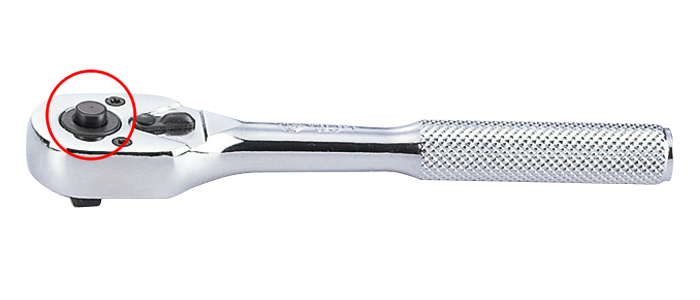
Quick-Release Ratchets
A quick-release ratchet has a button on the head.
Press the button and the ball bearing on the drive retracts, making the socket easier to install or remove; release the button and the ball re-engages with the groove inside the socket, helping hold it in place on the drive.
If you′re swapping between different socket sizes frequently on a job, quick-release makes that swap a lot more direct.
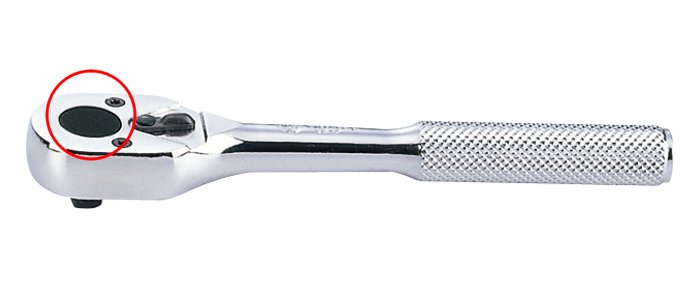
Non-Quick-Release Ratchets
A non-quick-release ratchet has no extra button — the socket is still held on by the ball bearing on the drive engaging the groove inside the socket.
To swap sockets, you just push one on or pull it off directly.
So quick-release versus non-quick-release isn′t really about which one is "better" — they just handle socket changes differently.
A simple way to decide:
- Swapping sockets often → quick-release is worth considering
- Everyday, general work → go with whichever you′re used to
| Quick-Release | Non-Quick-Release |
|---|---|
 |
 |
3 | Working at an Awkward Angle? Look at Whether the Head Can Change Angle
Sometimes a position isn′t hard to work in because there aren′t enough teeth — it′s because the handle and socket can′t hold a workable angle at all.
That′s when it′s worth looking at different ratchet head designs.
Beyond the standard type, KING TONY also makes swivel round head, universal joint, and flex-head/angle ratchets.
Standard Head
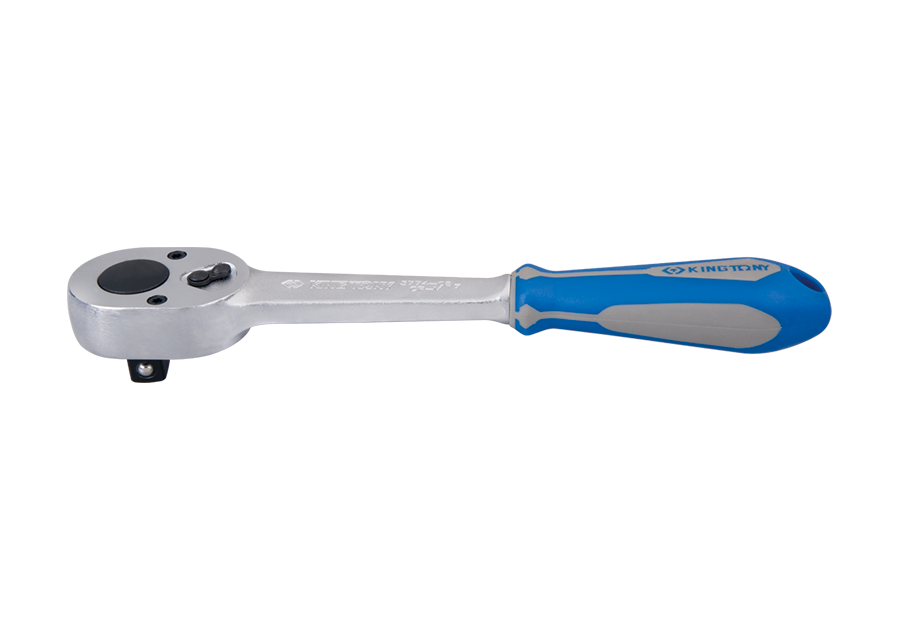
The head and handle stay in a relatively fixed operating direction, which works well for everyday jobs and positions that are easy to get at.
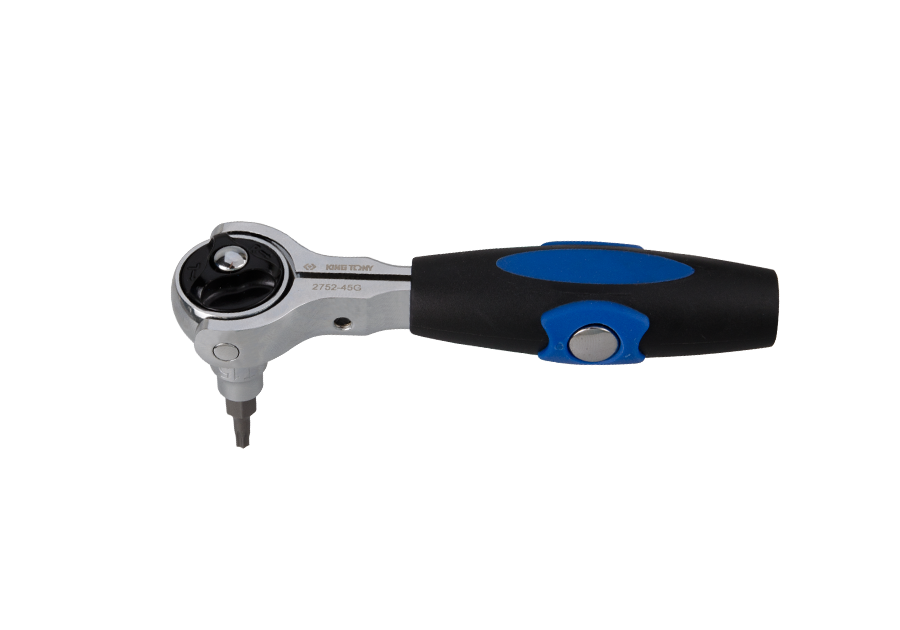
Swivel Round Head
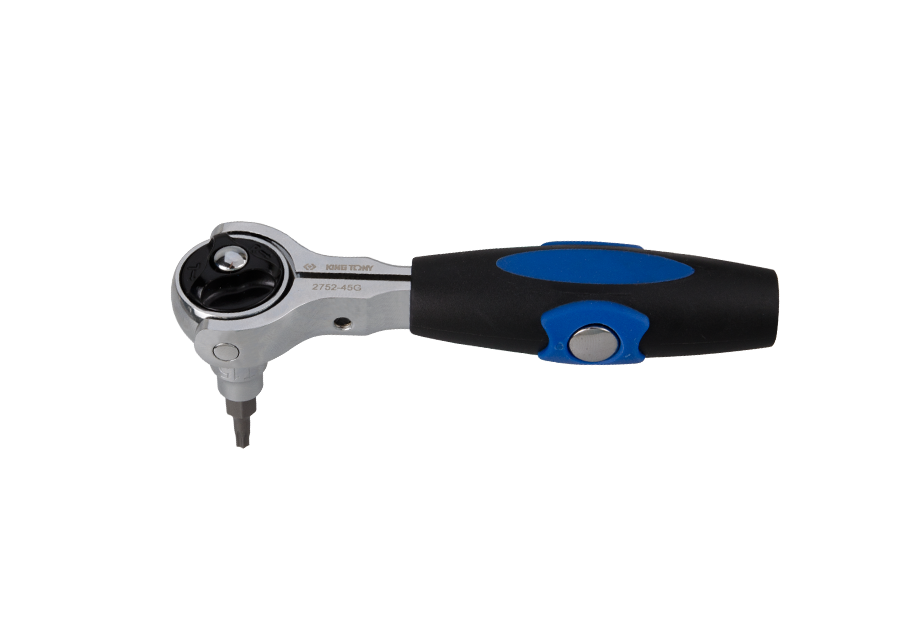
A swivel head design lets you change the operating angle, so the tool can work from different directions.
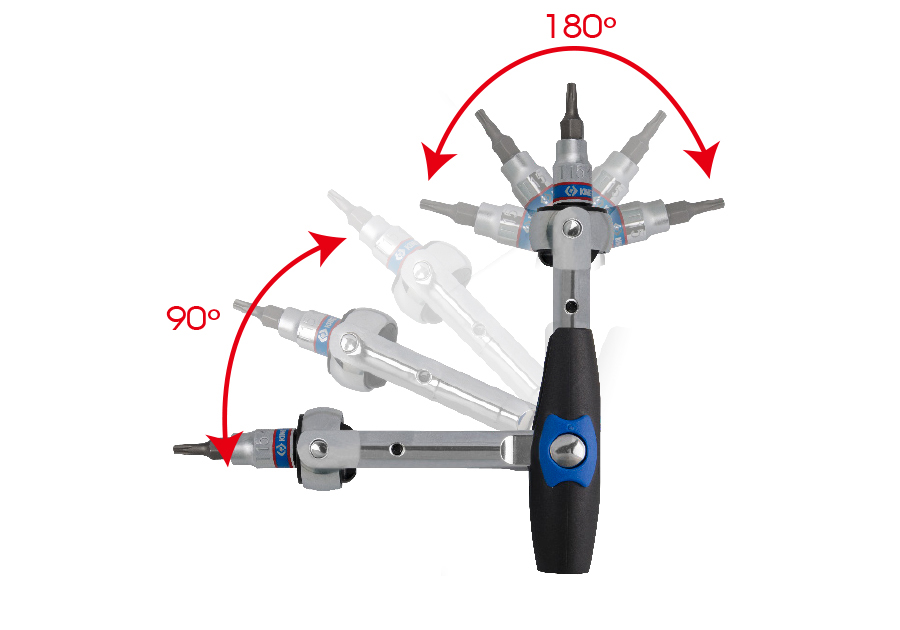
The KING TONY 2752-45G, a 1/4" DR. 72-tooth swivel round head ratchet, adds quick-release plus multi-angle use, and can even convert into a T-handle ratchet or a ratchet screwdriver.
Universal Joint | 3774G
The KING TONY 3774G, a 3/8" DR. 32-tooth universal joint ratchet with a rubber grip, uses a universal joint design — on top of its 32 teeth and 11° swing angle, the head also has a 15° universal joint angle.
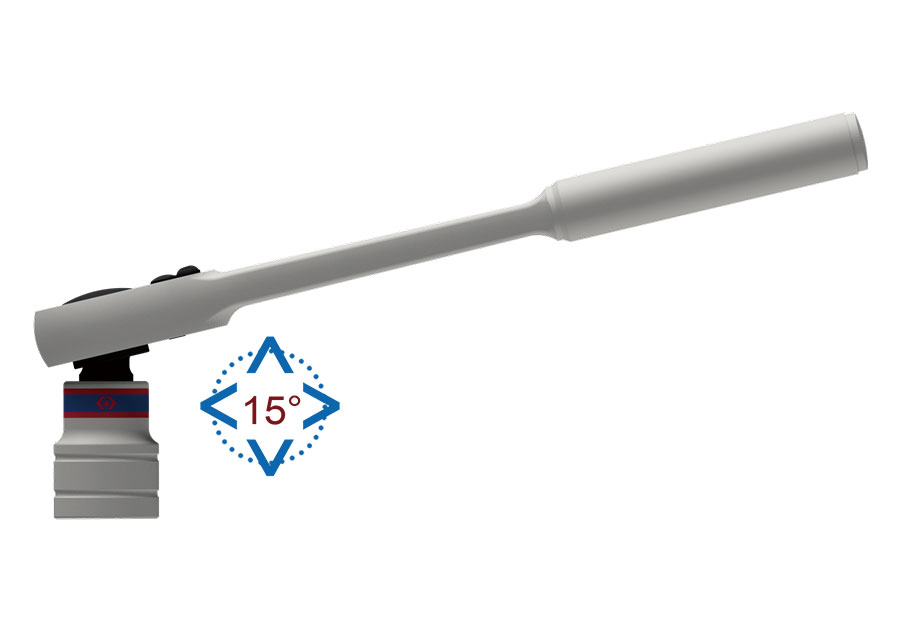
When a working position won′t let the tool line up straight-on, a universal joint gives you that extra angle, so the handle doesn′t have to stay perfectly in line with the socket.
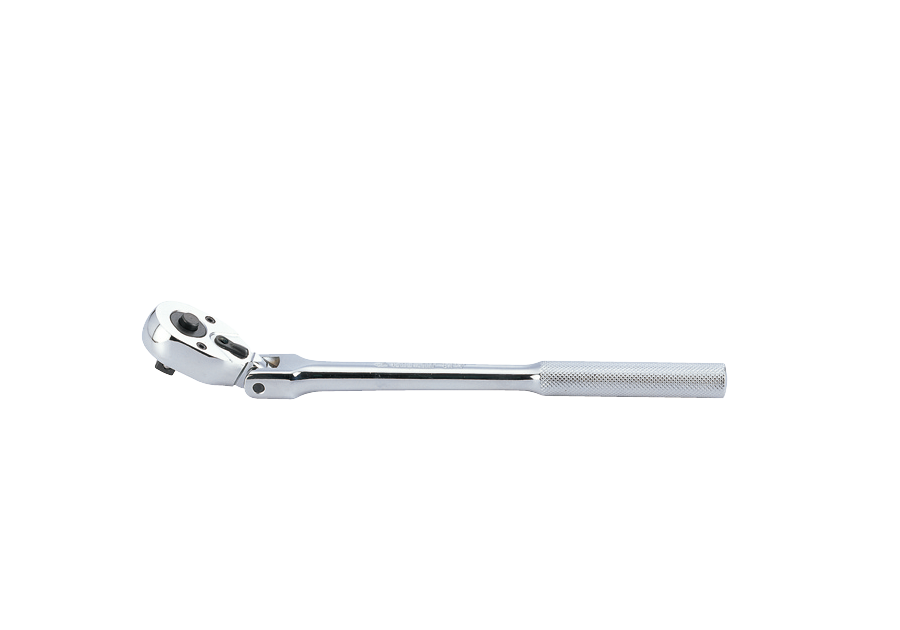
Flex Head | 3781F
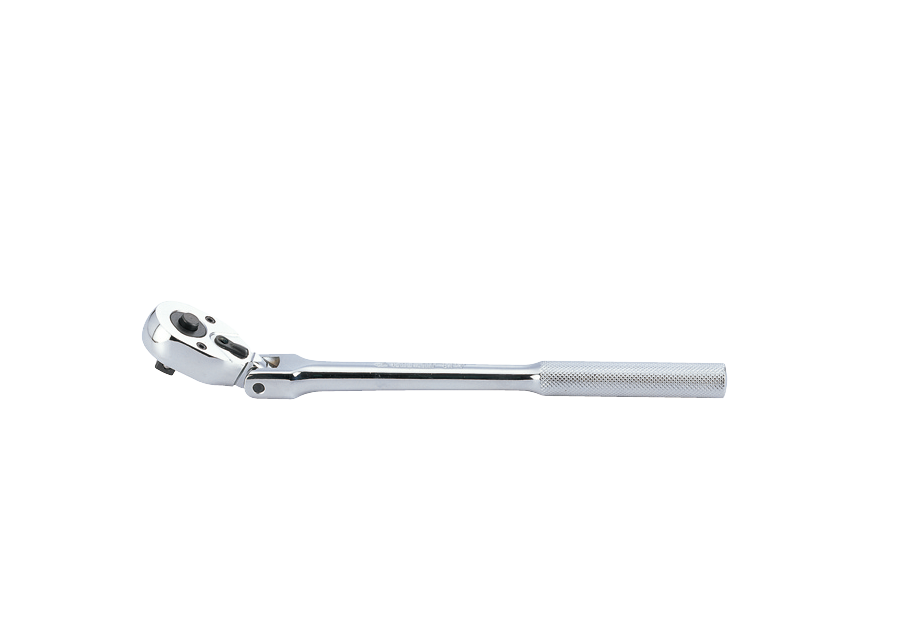
The KING TONY 3781F, a 3/8" DR. 32-tooth flex-head ratchet with a knurled grip and quick-release, also uses a 32-tooth design with roughly an 11° swing angle per tooth, but with a flex head instead — and it comes with quick-release built in.
That points to something important:
Even among 3/8", 32-tooth ratchets, a different head structure changes what kind of operating positions the tool can handle.
So when you′re dealing with an awkward angle, don′t automatically reach for more teeth — ask yourself first:
"Do I need a smaller swing per stroke, or do I need the tool itself to change angle?"
Those are two different needs.
4 | The Whole Tool Won′t Fit or Move? Look at Mini and Telescoping Designs
Some positions don′t just limit how far the handle can swing — they limit how much room the entire ratchet has to move at all.
In that case, beyond tooth count, you can also choose based on the tool′s own size and length.
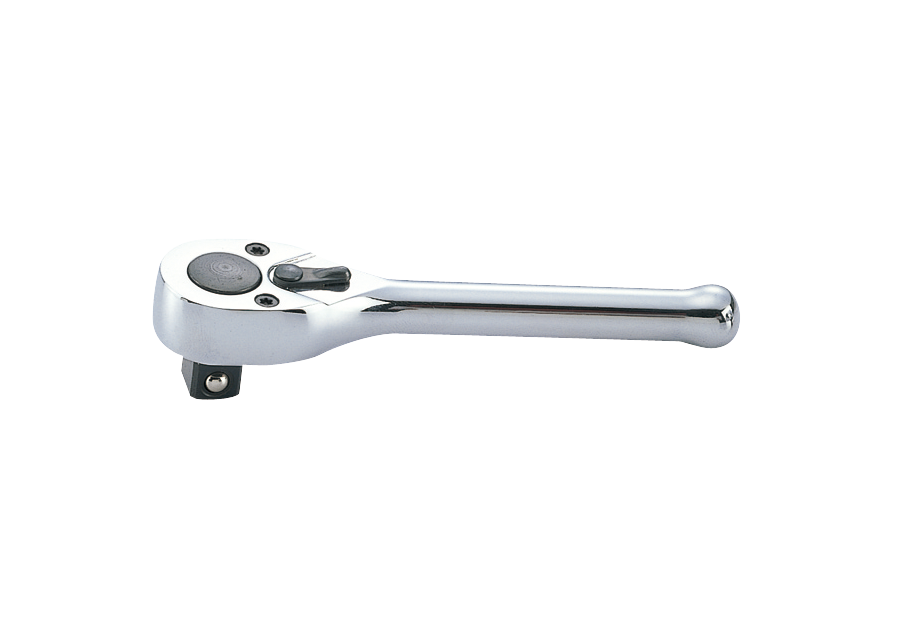
Tight Clearance | 3760 3/8" DR. 72-Tooth Mini Ratchet
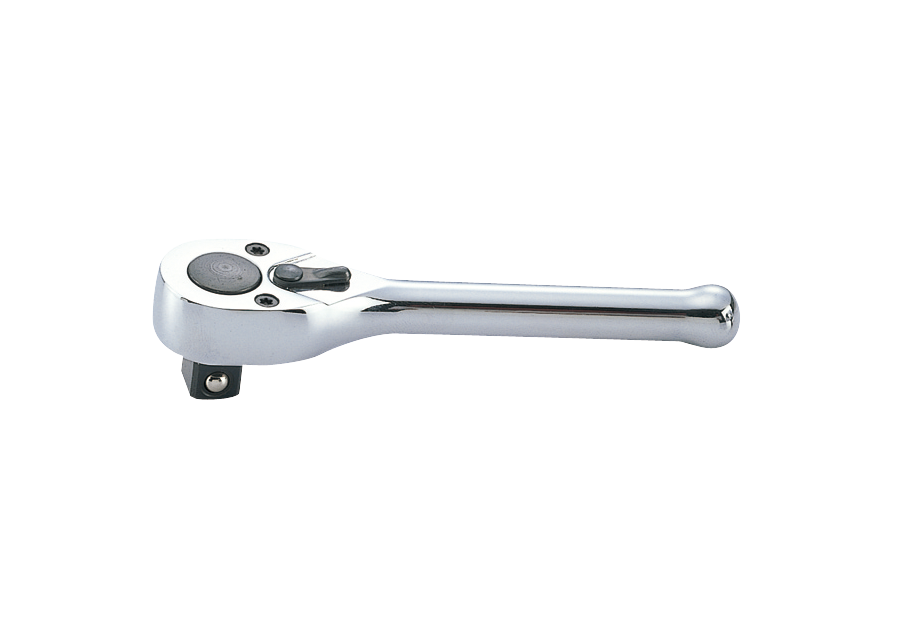
The KING TONY 3760 is a mini-design ratchet, just 110 mm overall, paired with 72 teeth and a 5° swing angle.
When a work position doesn′t have room for a standard-size ratchet, a more compact tool gives you another option.
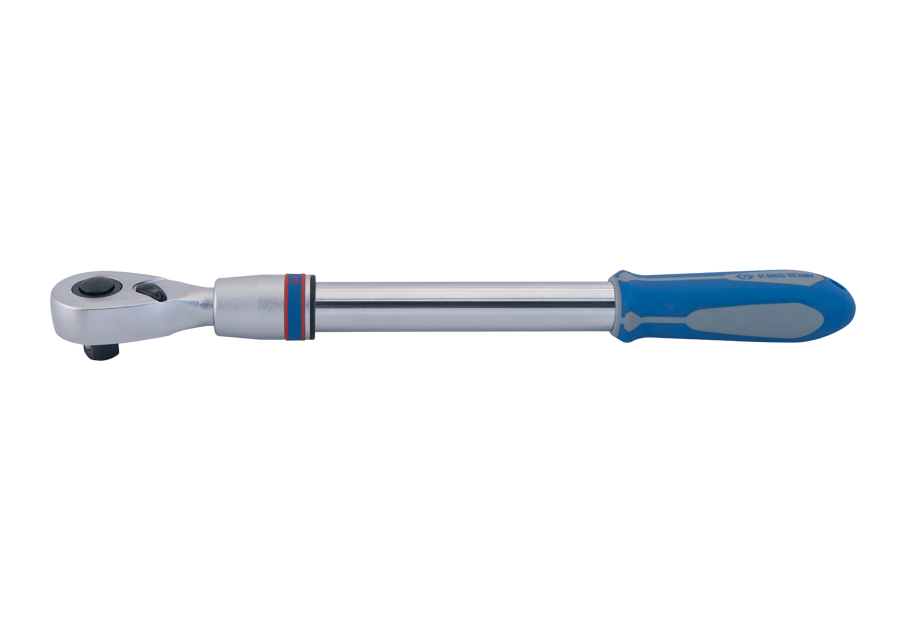
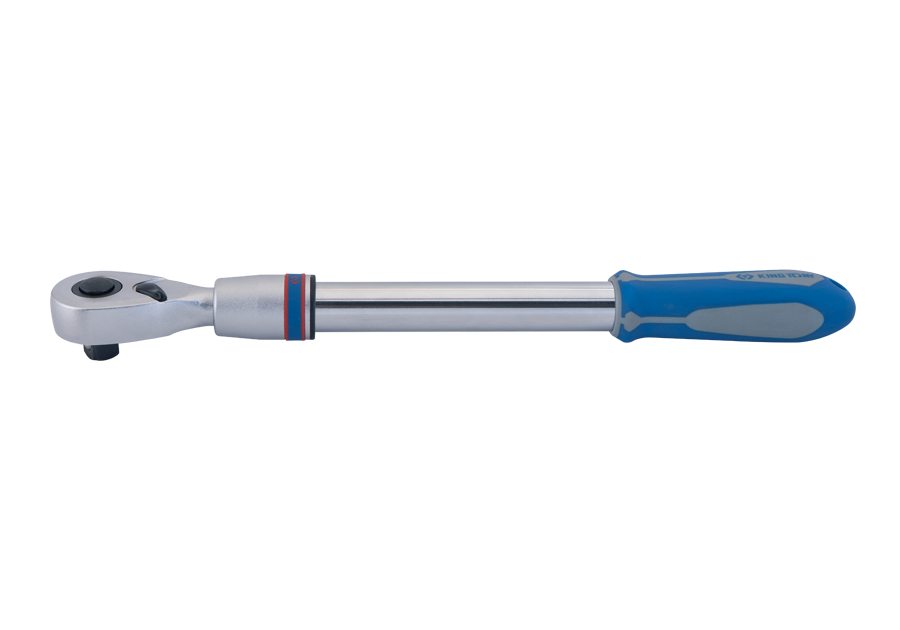
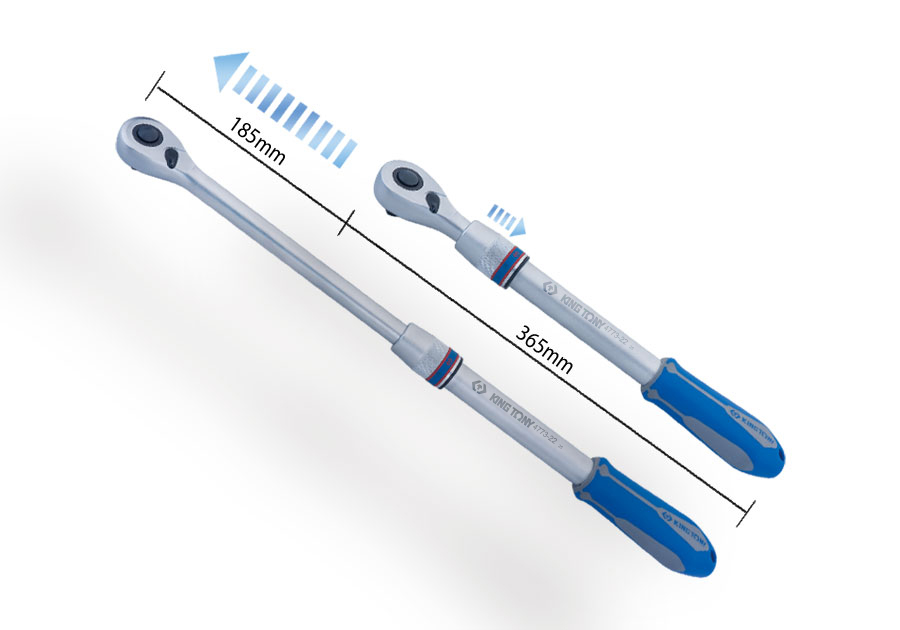
Need to Adjust Working Length | 4773-22GS 1/2" DR. Telescoping Ratchet
A different kind of need isn′t "shorter is better" — it′s wanting to adjust the handle length depending on the job.
The KING TONY 4773-22GS uses a segmented telescoping design, with a handle that adjusts between 365–550 mm, paired with 90 teeth and a 4° operating angle. Collapse it shorter for storage and tighter handling, or extend it out when you need more leverage.
So when clearance is the issue, don′t just default to "more teeth":
- Whole tool doesn′t fit, tight clearance to move → look at a mini design
- Want to adjust handle length for the job → look at a telescoping design
- Only the swing angle is the limiting factor → then compare tooth count first
In other words:
Tooth count solves "how much you need to turn"; mini and telescoping designs solve "how long the whole tool needs to be."
Bottom Line: Don′t Choose a Ratchet by Tooth Count Alone
Tooth count really is one of the most important specs on a ratchet, but what it mainly solves is "how much swing you need."
Beyond that:
- Quick-release affects how sockets go on and come off
- An adjustable-angle head affects how flexible you are working from different directions
- Mini and telescoping designs affect how the whole tool handles in different amounts of space
So the ratchet that′s actually right for you isn′t necessarily the one with the highest tooth count.
Start by figuring out your own working environment and how you actually operate — then pick the design that fits. That′s the more practical way to choose.
Learn the tool. Enjoy the work.
Further Reading
Want to dig deeper into how ratchet tooth count and swing angle actually work:
→ "Tool Basics"
Want to learn about the types, structure, and common uses of sockets:
→ "Understanding Sockets"
Want to know how to choose between 6-point and 12-point sockets:
→ "6-Point vs. 12-Point Sockets — What′s the Difference, and Which Should You Choose?"
Want to know the difference between a standard socket and a deep socket:
→ "What Is a Deep Socket For? Standard vs. Deep Socket"
FAQ | Choosing a Ratchet Wrench
Q1: Is more teeth on a ratchet always better?
Not necessarily. A higher tooth count reduces the swing needed per stroke, which is an advantage in tight spaces — but the right choice still depends on quick-release, head style, and overall size.
Q2: What′s the advantage of a quick-release ratchet?
Quick-release lets you release the socket with a button, making installing and removing it more direct. If you′re swapping between different socket sizes often on a job, it makes things noticeably more convenient.
Q3: When does an angle-adjustable ratchet make sense?
When a bolt or nut sits at an angle that′s hard to work with and the handle can′t hold a workable position, it′s worth considering a swivel round head, universal joint, or flex-head design.
Q4: In a tight space, is a high tooth count all I need?
Not necessarily. A high tooth count only reduces the swing angle. If the whole tool doesn′t fit the space, or the working angle is bad, even a very high tooth count might not make the job easy.
Q5: How do I choose between a mini and a telescoping ratchet?
If the whole tool has limited room to move, lean toward a mini design; if you want to adjust the handle length depending on the job, lean toward a telescoping design. The two solve different needs.