Tools Introduction Class
Tools Feature & Advantage Introduction Class
Tools Operation and Application Class
Tools Maintanence and Repair Class
Tools Quality Checking and Certified Class
Tools Torque Introduction
Marketing Service Area
Member post
How to Choose a Copper Tube Cutter? Diameter, Space, and Tubing Explained
Popularity : 5They′re all tube cutters — so why are some especially compact, some built to handle larger diameters, and some made specifically for hard copper tube?
Choosing a tube cutter isn′t just about whether it can cut through the tube.
What really needs to be confirmed first is:
What tubing are you cutting? What diameter? How much working space do you have on site?
KING TONY offers a range of tube cutters built for different tubing types, diameters, and job requirements.
This article starts with "what tube cutters are available," then walks you through how to choose based on different working conditions.
1|What Tube Cutters Does KING TONY Offer?
Before comparing them, here′s a quick look at the main tube cutters in the lineup.
7915-30|Copper Tube Cutter
Capacity: 3–30 mm
A standard copper tube cutter that covers common tube diameters.
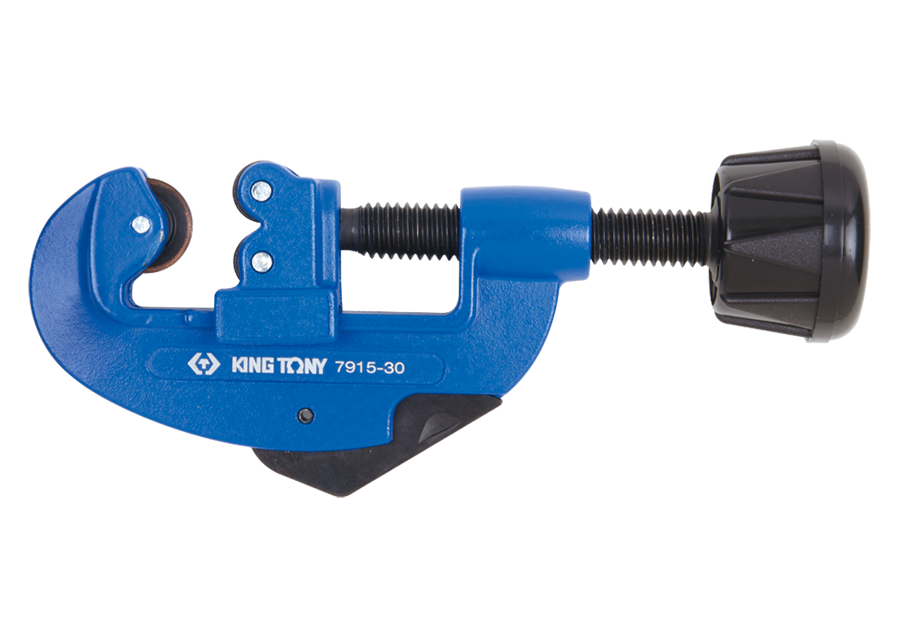
7915-30 Copper Tube Cutter
7915A-19|Mini Copper Tube Cutter
Capacity: 3–19 mm
Overall tool length: approx. 62 mm.
Its shorter body is suited to tight spaces — for example, tubing close to a wall, equipment, or other parts.
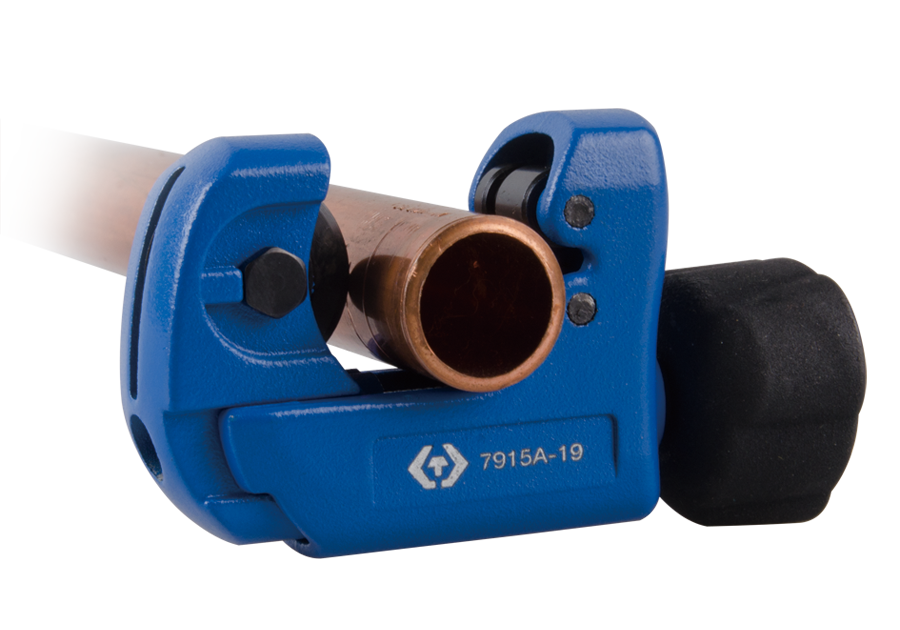
7915A-19 Mini Copper Tube Cutter
7915A-28|Mini Copper Tube Cutter
Capacity: 3–28 mm
Overall tool length: approx. 70 mm.
Also a mini design, but covers a larger diameter range than the 7915A-19.
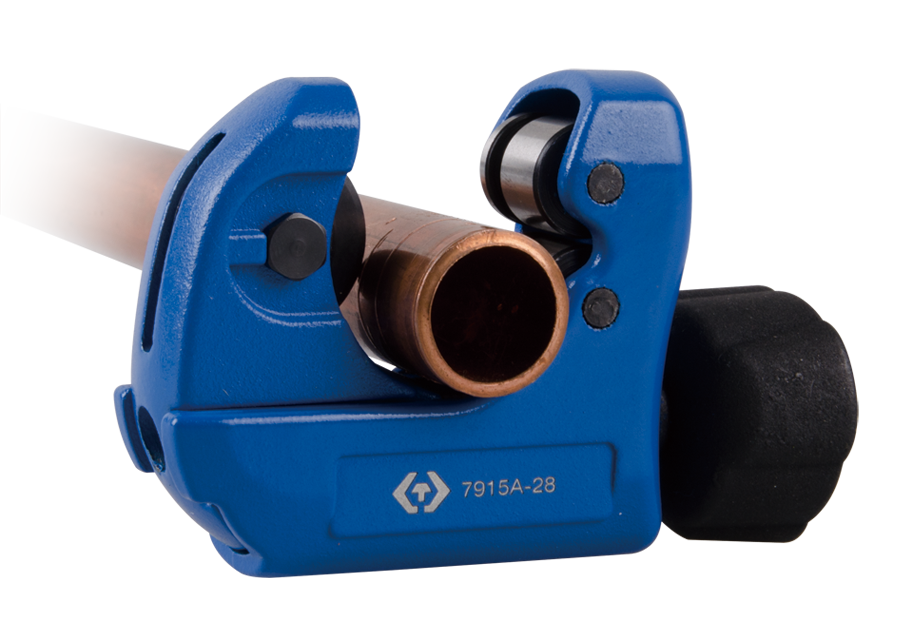
7915A-28 Mini Copper Tube Cutter
7914A-35|Copper Tube Cutter
Capacity: 3–35 mm
Uses four rollers for a more stable support structure, with quick adjustment, a replaceable cutting wheel, and a spare blade.
Suited to jobs that need to cover a larger diameter range.
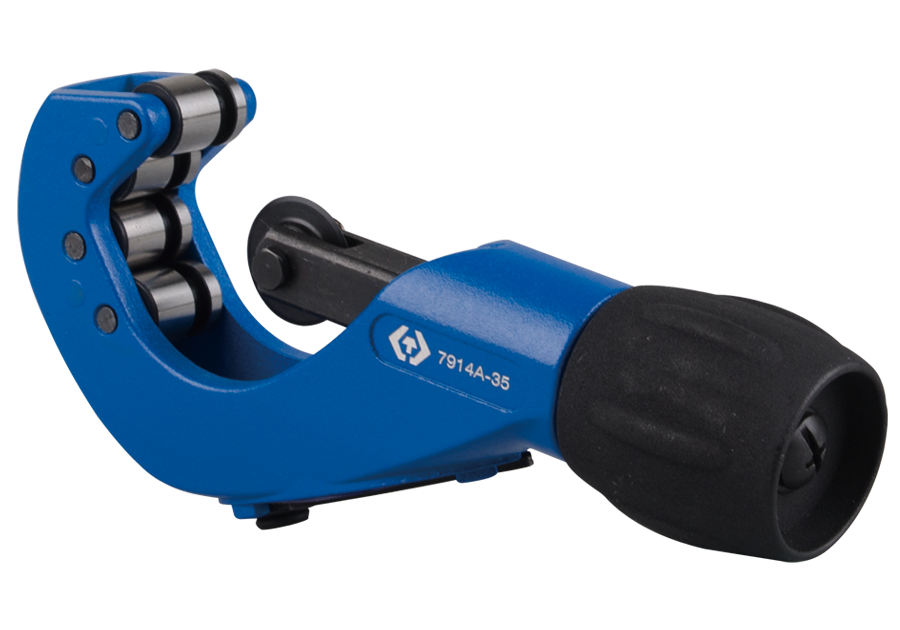
7914A-35 Copper Tube Cutter
7914C-70|Copper Tube Cutter
Capacity: 6–70 mm
Uses four rollers for a more stable support structure, with a quick-feed design for easier operation and a larger diameter range, and comes with:
- A spare blade
- A telescoping deburring tool
Suited to jobs involving larger-diameter tubing.
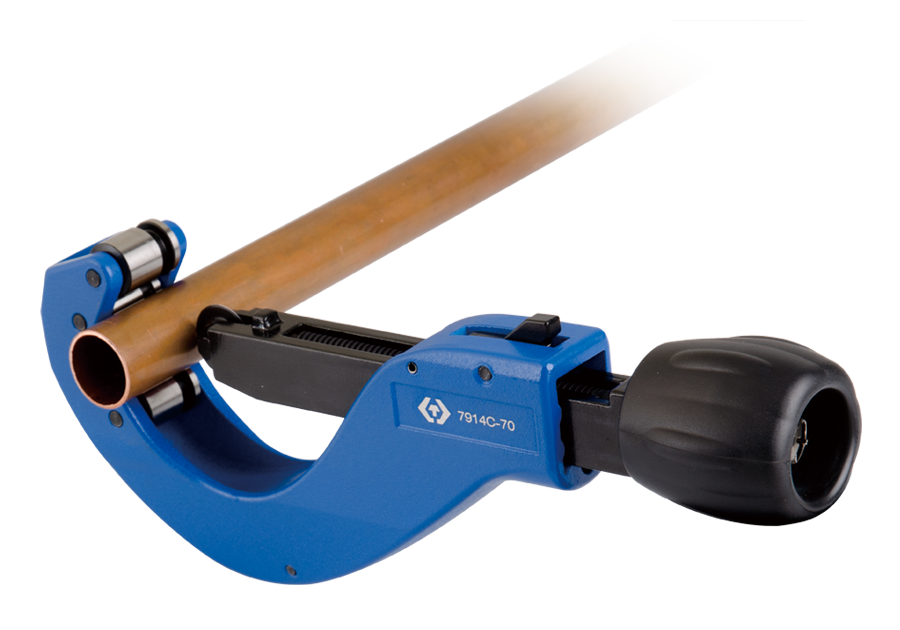
7914C-70 Copper Tube Cutter
7916M|Single-Size Tube Cutter
Built specifically for brass tube and suited to tight spaces.
Comes in three sizes:
- 7916-12M: 12 mm
- 7916-15M: 15 mm
- 7916-21M: 21 mm
Features an automatic feed design.
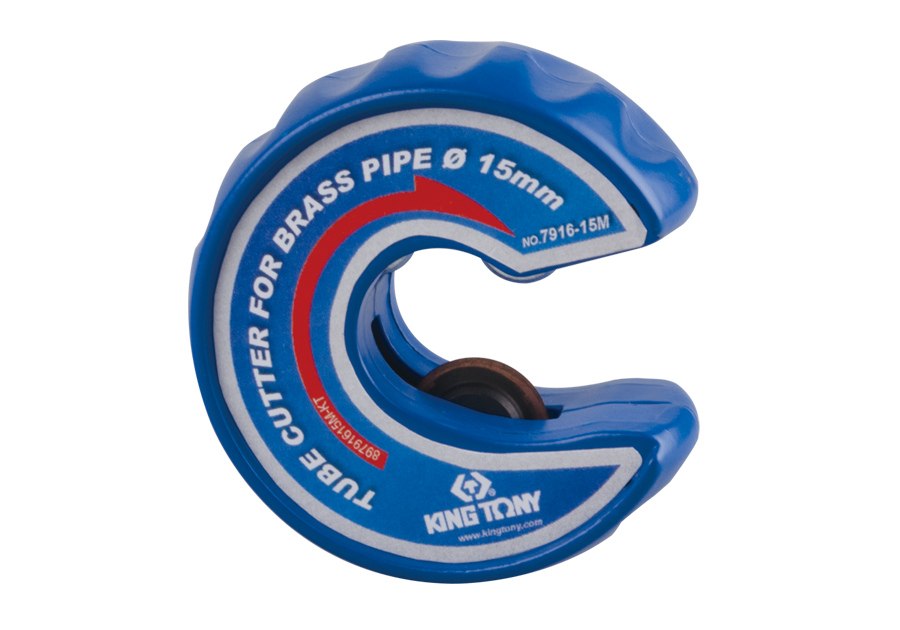
7916M Single-Size Tube Cutter
Once you′ve seen these models, one thing becomes clear:
KING TONY′s tube cutters don′t just differ in size — each is built for a different combination of tube diameter, working space, and tubing material.
2|How Does a Tube Cutter Actually Cut Through Tubing?
A tube cutter doesn′t cut through the tube in one motion like a pair of scissors.
A typical tube cutter uses a cutting wheel and rollers to hold the tube in place, then rotates around the tube so the cutting wheel gradually works its way into the tube wall.
The basic idea behind the operation is:
Position the tube → bring the wheel into contact → rotate around the tube → feed in gradually
You don′t need to press the cutting wheel into the tube with a lot of force right from the start.
Through rotation and gradual adjustment, the cutting wheel slowly works its way in along the same line until the cut is complete.
3|How Do You Choose a Tube Cutter for Different Jobs?
You can judge which tube cutter to use based directly on three factors:
The tubing material, the tube′s outer diameter, and the working space on site.
Case 1|Standard copper tube, plenty of surrounding space
If you′re working with standard copper tube, the diameter falls within the tool′s range, and there′s enough space around it for the tool to rotate, you can start with a standard adjustable tube cutter.
For example:
7915-30|3–30 mm
If you need an even larger diameter range, you can move up to the 7914 series.
Case 2|Tight working position
If the tubing is close to a wall, inside equipment, or near other parts, a standard tool may not have enough room to rotate even if the diameter is within range.
In that case, consider a mini model:
- 7915A-19|3–19 mm
- 7915A-28|3–28 mm
Choose between the two mainly based on the actual tube diameter.
So the point of a mini model isn′t "smaller is better" — it′s:
Making it easier to get working clearance in a tight space.
Case 3|Larger diameter tubing
If the actual diameter exceeds the range of a standard tool, you′ll need to move up to a larger tube cutter.
- 7914A-35|3–35 mm
- 7914C-70|6–70 mm
The 7914C-70 also has a quick-feed function for cutting through tubing faster, plus a telescoping deburring tool.
There′s no need to chase the biggest size — just confirm:
Whether the actual diameter falls within the tool′s rated range.
Case 4|Working in a narrow wall gap
If you′re working in a narrow gap along a wall, the space limitation means a standard copper tube cutter won′t do — you′ll need a mini or single-size model instead.
Choose from the 7916M series by size:
- 12 mm → 7916-12M
- 15 mm → 7916-15M
- 21 mm → 7916-21M
In this case, the order you check things in should be:
Tubing material first, then size.
A Quick Way to Remember the Order
If you′re not sure where to start, follow this order:
① Tubing material
↓
② Actual diameter
↓
③ Working space on site
For example, with the same 15 mm copper tube:
If there′s plenty of space around it, you can choose a standard tube cutter that matches the diameter.
If the tubing sits right against a wall, you can then consider a mini model.
Diameter determines whether a tool can be used at all; space determines how easy it is to use.
4|What Else Should You Check After Cutting?
Cutting the tube doesn′t mean the job is completely done.
Once you′ve cut the tube, check the condition of the tube end.
① Is the tube opening intact?
Confirm that the cut is clean and that the tube opening hasn′t been noticeably flattened or deformed.
② Are there any burrs on the tube opening?
After cutting, burrs may be left on the inside or outside of the tube opening.
If you still need to flare, connect, or otherwise process the tube next, check first whether the opening needs further cleanup.
③ What processing comes next?
If the next step is flaring, the condition of the tube end matters even more.
A crooked cut, noticeable deformation, or unaddressed burrs can all affect the next processing step.
So once you′re done cutting, remember:
Cut → check the tube opening → clean up burrs → move on to the next step
Conclusion|Check Your Needs First, Then the Model
Choosing between tube cutters isn′t simply "bigger is better."
The real order to follow is:
Tubing material → diameter → working space
Confirm the actual working conditions first, then choose from the models that fit.
And once the cut is done, don′t forget to check the tube opening and burrs — the condition of the tube end matters just as much when flaring or further processing comes next.
It′s not about picking the most all-purpose tube cutter — it′s about picking the right tool for this particular job.
Learn the tool. Enjoy the work.
FAQ|Common Copper Tube Cutter Questions
Q1|Is a bigger capacity range always better for a tube cutter?
Not necessarily.
For example, if the actual diameter is only 15 mm but the working space is extremely tight, a mini tube cutter rated for 3–19 mm may already be exactly what you need.
Capacity range is just one factor — the actual working space needs to be considered too.
Q2|Can a mini model only cut very thin tubing?
Not necessarily.
The 7915A-19 covers 3–19 mm, while the 7915A-28 covers 3–28 mm.
"Mini" mainly refers to a shorter tool body suited to tight spaces — it doesn′t mean the tool can only handle very thin tubing.
Q3|How do you choose between the 7914A-35 and the 7914C-70?
The most direct difference is the capacity range.
- 7914A-35: 3–35 mm
- 7914C-70: 6–70 mm
If the actual diameter exceeds 35 mm, you′ll need to choose a tool that covers the larger range.
The 7914C-70 also has a quick-feed design and a telescoping deburring tool.


