Tools Introduction Class
Tools Feature & Advantage Introduction Class
Tools Operation and Application Class
Tools Maintanence and Repair Class
Tools Quality Checking and Certified Class
Tools Torque Introduction
Marketing Service Area
Member post
What to Do If the 34488-26 Torque Multiplier Gets Stuck? How to Release Reaction Force and Residual Torque
Popularity : 10128You′ve finished a high-torque job with a torque multiplier and now want to take the tool off — but the reaction arm is stuck, and the multiplier just won′t come loose?
Don′t force it off, and don′t hit it with anything.
This can happen because, after a high-torque job, residual torque is still trapped inside the multiplier, keeping the gear set under load. That residual torque needs to be released first before the tool can be removed safely.
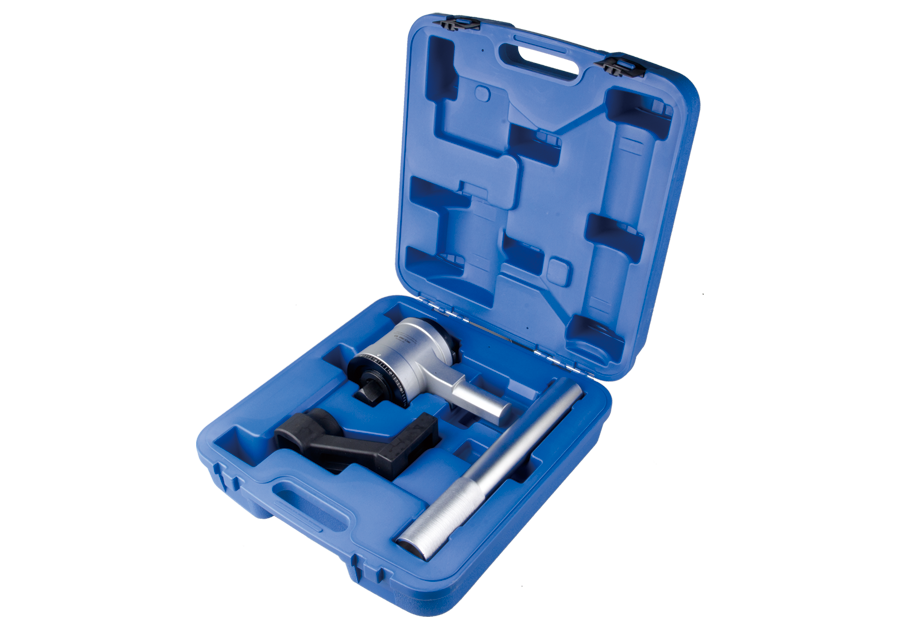
This article uses the KING TONY 34488-26 Torque Multiplier as an example to explain why it gets stuck, what the reaction arm actually does, and — most importantly — how to release residual torque.
Why Do You Need a Reaction Arm at All?
The first time people use a torque multiplier, a common question is: what does that reaction arm off to the side actually do?
As a torque multiplier amplifies the input torque, the tool body also takes on an equal and opposite reaction moment. Without a reaction arm braced against a solid support point, the multiplier can spin along with the input tool, preventing torque from transferring effectively to the bolt or nut — and increasing the risk of losing control during operation.
So the reaction arm isn′t just a part that props the tool up — it′s the key structure that lets the multiplier work stably.
The 34488-26 comes with two reaction arms, so you can choose the one that fits your working space and support point. Before use, always make sure the reaction arm is braced firmly against a solid, non-slip support point.
The simple way to remember it: the multiplier amplifies torque, and the reaction arm braces against the opposing force.
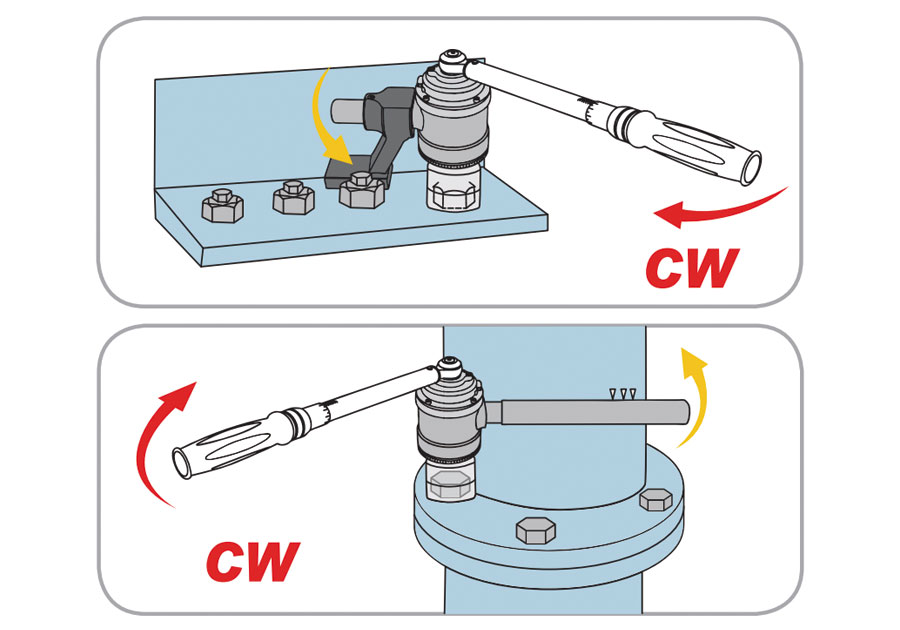
Reaction arm installation diagram
Why Does the Multiplier Get Stuck After Use?
This is one of the most common issues people run into the first time they use a torque multiplier.
After a high-torque job, residual torque may still be present in the gear set and mechanism, keeping the multiplier under load. So when you try to pull the tool straight off, you may find:
- The reaction arm is stuck
- The multiplier won′t come off directly
- The input tool feels like it′s locked
This doesn′t necessarily mean the tool is faulty — it′s often just the result of residual torque left over from a high-torque job.
What matters most at this point is:
Don′t force it off, and don′t strike the multiplier.
Release the residual torque first, then remove the tool.
What to Do When the Multiplier Is Stuck and Won′t Come Off
To release residual torque on the 34488-26, follow the steps below.
Step 1|Increase Torque by 5%
First, apply torque again, raising the input torque to 105% of the original setting to slightly loosen the gear set.
For example, if the original setting was 100 Nm, raise it to 105 Nm to release.
Note: Actual operation must still not exceed the product′s rated maximum input torque.
Step 2|Switch to the N Position
Once the gear set has loosened slightly, slowly move the selector lever to the center "N" position.
The N position is used to release residual torque.
Step 3|Release Slowly in the Opposite Direction
Slowly release the torque wrench in the opposite direction, letting the residual torque inside the gear set dissipate gradually.
Don′t jerk it suddenly or turn the tool quickly during this process.
Step 4|Confirm Full Release Before Removing
Once you′ve confirmed the residual torque is fully released, remove the input tool and the multiplier.
If the tool still feels under load, don′t force it off — re-check the release procedure and the tool′s condition instead.
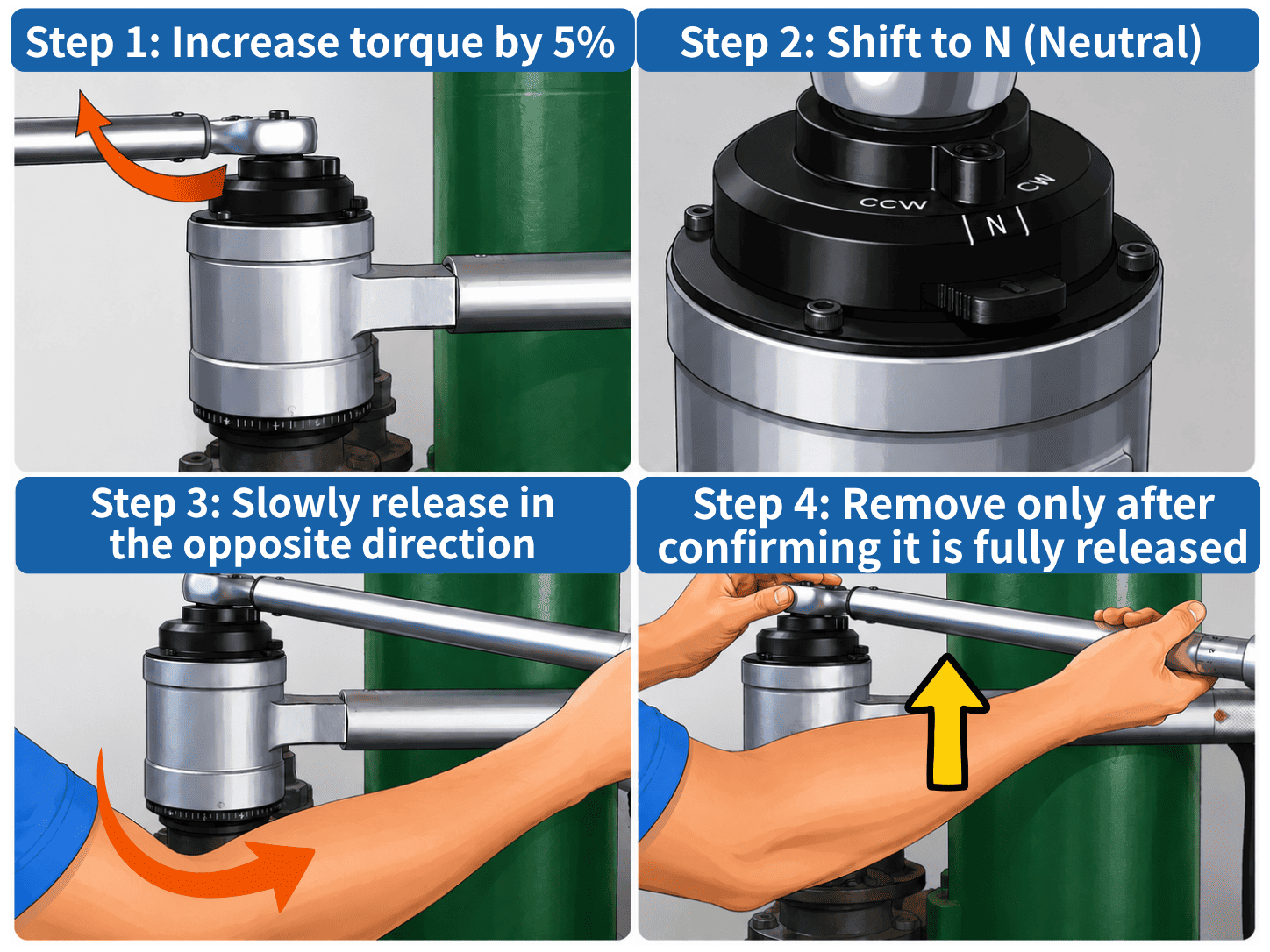
Residual torque release steps
Can You Apply Force in the N Position?
No. The N position is for release only.
This is the one thing you absolutely need to remember when using the 34488-26.
The 34488-26′s selector lever has three positions — CW, CCW, and N:
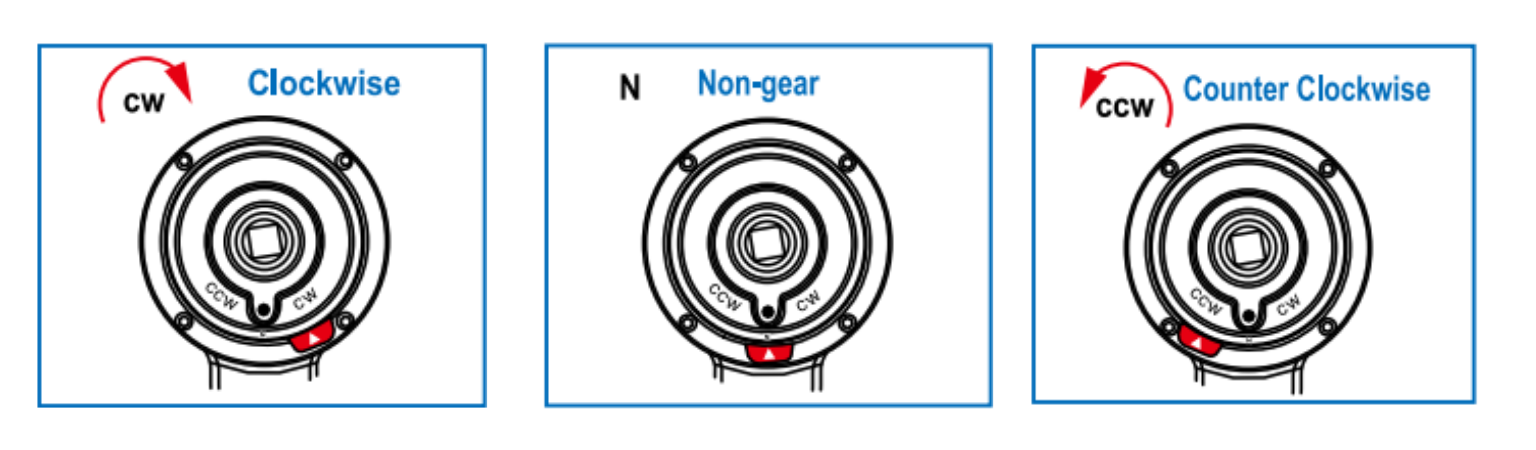
- CW: normal clockwise operation
- CCW: normal counterclockwise operation
- N: releases residual torque
For normal tightening or removal, the lever should be set to CW or CCW.
⚠️ Important
Switching to N is meant for releasing residual torque — never apply force while the lever is in the N position. If you keep applying force in N just because the tool feels stuck, it can damage the tool or create other operating risks.
Why Shouldn′t You Just Force It Off?
Because the multiplier may still be under load at that point.
Think of it this way:
High-torque fastening → gear set stays under load → residual torque remains in the mechanism → tool gets stuck
Forcing it off at this point is like trying to take the tool apart without first releasing the force still stored inside it.
So the correct order is:
Release the residual torque first → then remove the multiplier
Not:
❌ Stuck → force it off → strike it
That′s also why, when using a torque multiplier, knowing "how to tighten" isn′t enough — you also need to know "how to release it safely."
34488-26 Key Points to Remember
If you don′t want to remember everything above, here are the four essentials:
-
① Brace the reaction arm firmly against a support point
This keeps the multiplier from spinning along with the input tool. -
② Getting stuck after use doesn′t always mean a fault
Residual torque may simply remain after a high-torque job. -
③ Never force it off or strike it when it′s stuck
Release the residual torque using the correct procedure first. -
④ N is for release only
Use CW or CCW for normal operation — never apply force in the N position.
Watch the Video: The 34488-26 in Action
This article walks you through reaction force, residual torque, and what the N position is for. If you′d rather see the actual operating procedure, check out the video below.
KING TONY 34488-26 Torque Multiplier Demonstration
Conclusion: Release First, Then Remove
If a torque multiplier won′t come off after a high-torque job, don′t rush to force it.
First check whether the tool is still under load, then follow the correct procedure: increase torque by 5%, switch to N, release slowly in the opposite direction, and confirm full release before removing the tool.
Knowing how to release residual torque correctly is what lets a high-torque job not just get finished, but finish safely.
Learn the tool. Enjoy the work.