Tools Introduction Class
Tools Feature & Advantage Introduction Class
Tools Operation and Application Class
Tools Maintanence and Repair Class
Tools Quality Checking and Certified Class
Tools Torque Introduction
Marketing Service Area
Member post
Torque Data of Screws
Popularity : 22924Fastener tightening should not rely on feel alone. Different fastener sizes, strength classes, thread conditions, and working environments can all affect the recommended torque value. Insufficient torque may cause fasteners to loosen, while excessive torque may damage the threads, break the bolt, or damage the component.
This article provides a fastener grade torque conversion table to help you quickly find the recommended torque value according to fastener size and strength class. It also explains how to read fastener strength classes, understand common torque units, and use the KING TONY torque tool search function to find a suitable tool after checking the required torque value.
How to Read a Fastener Grade Torque Conversion Table?
When using a fastener grade torque conversion table, first confirm the fastener size, such as M6, M8, or M10. Then confirm the fastener strength class, such as 8.8, 10.9, or 12.9. The value at the intersection of the corresponding row and column is the recommended torque value. Before setting the tool, also make sure the torque unit in the table matches the unit on your torque tool. If the units are different, convert the torque value first before setting the tool.
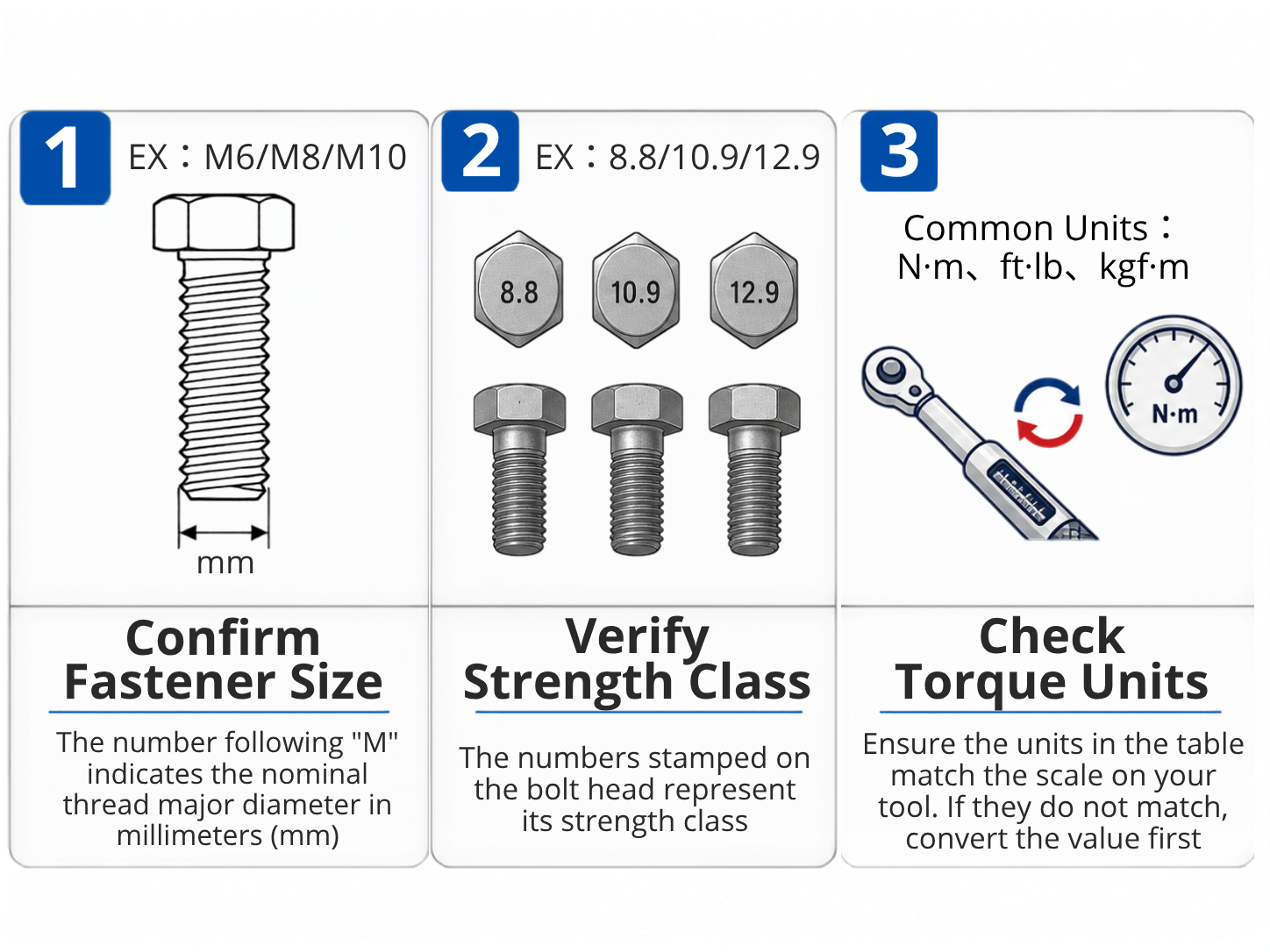
Fastener grade torque table reading steps
For example, if the fastener size is M8 and the strength class is 10.9, first find M8 on the left side of the table, then match it with the 10.9 column at the top. The value at the intersection is the recommended torque value. If the table uses N·m but your torque tool is marked in ft·lb, convert the value before setting the tool.
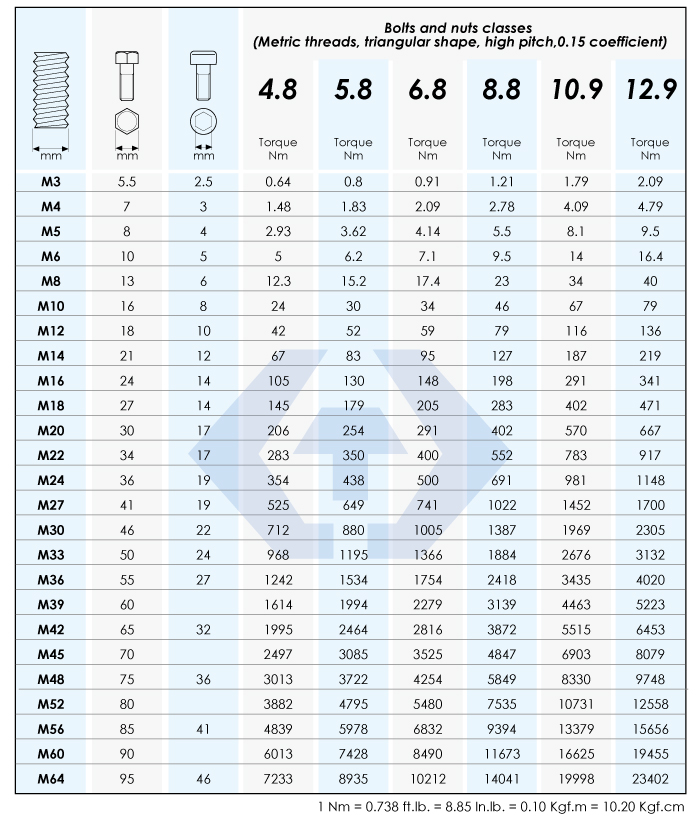
Fastener grade torque conversion table
The values in the table are for general reference only. In actual applications, torque settings should still be determined according to the equipment manufacturer’s service manual, engineering specifications, fastener material, tightening conditions, lubrication, and working environment. For automotive repair, machinery, structural fastening, or safety-critical applications, always follow the manufacturer’s service manual or engineering specifications.
What Are the Common Torque Units?
Different service manuals or torque tools may use different torque units. After finding the required torque value, the most important step is to confirm that the units are consistent. This helps prevent under-tightening or over-tightening caused by unit conversion mistakes.
Common torque units include:
| Unit | Name | Common Applications |
|---|---|---|
| N·m | Newton meter | Common international standard and torque wrench unit |
| kgf·cm | Kilogram-force centimeter | Common in some Taiwanese and Japanese technical data |
| kgf·m | Kilogram-force meter | Used for larger torque value conversions |
| ft·lb | Foot-pound | Common in US and imperial service data |
| in·lb | Inch-pound | Common for low-torque or precision fastening applications |
For example, if the service manual specifies the torque value in ft·lb but your torque wrench is marked in N·m, convert the value first before setting the tool.
Different torque units cannot be used interchangeably. For example, N·m and ft·lb must be converted before setting the tool. If you are unsure about the conversion, confirm the converted value before using the torque tool.
How to Search for a Suitable Torque Tool After Finding the Required Torque Value?
After finding the required torque value from the torque table above, the next step is to choose a suitable torque tool.
When selecting a torque tool, do not only check the maximum torque value. You should also make sure the required torque value falls within the tool’s working range, and confirm that the torque unit and drive size match the actual application.
You can use the KING TONY torque tool search function below. Enter the required torque value, select the torque unit and drive size, and quickly find suitable torque wrenches, torque multipliers, or related torque tools.
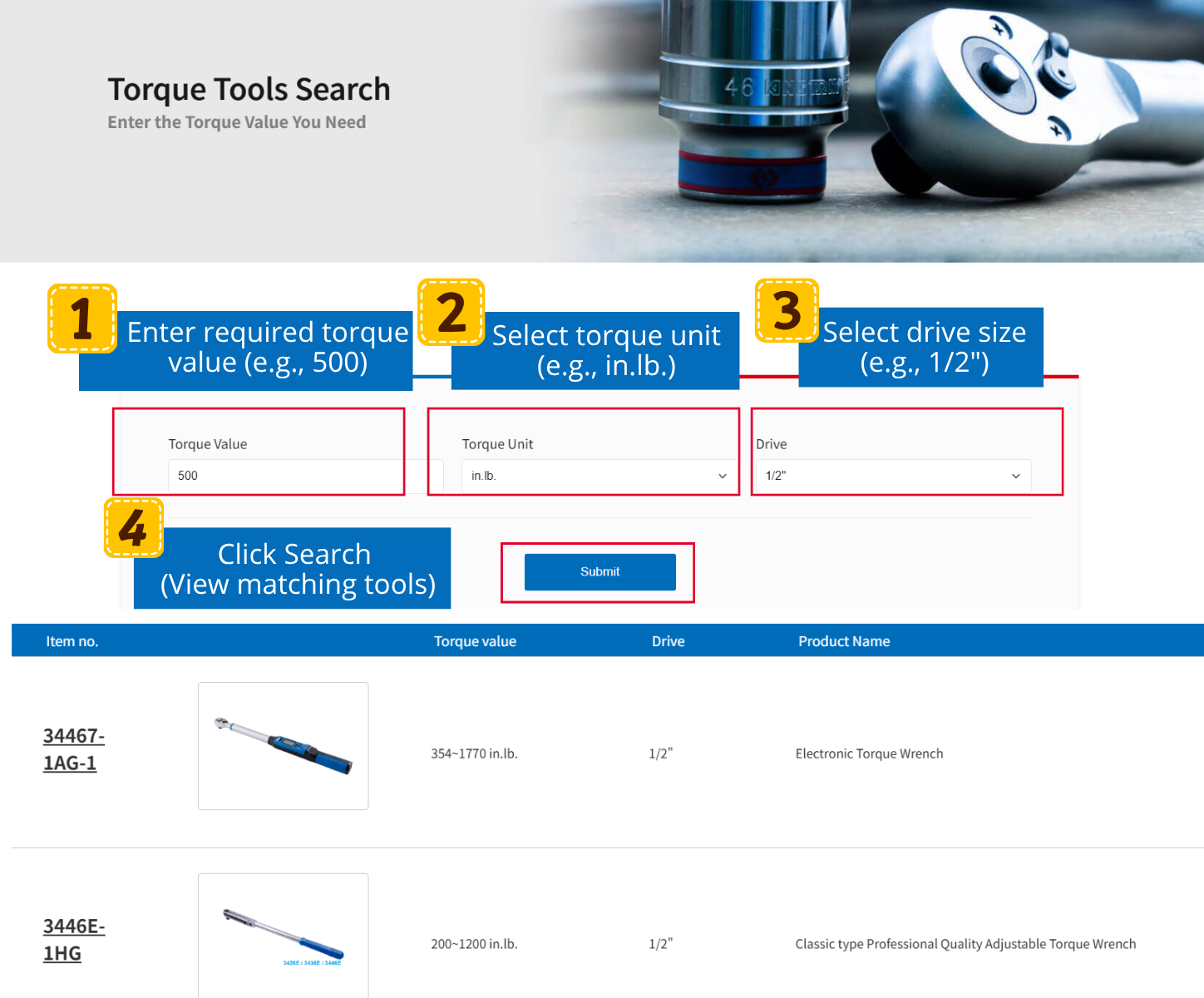
The “torque value” shown in the search results represents the tool’s working torque range. When selecting a tool, make sure your required torque value falls within that range and that the drive size matches the actual application.
What Should You Check When Choosing a Torque Tool?
After finding tools that match the required torque range, you can further evaluate whether they are suitable for the actual job by checking the following points:
| Item to Check | Description |
|---|---|
| Torque range | The required torque value should fall within the tool’s working range |
| Torque unit | Check whether the tool supports the required unit, such as N·m, ft·lb, or kgf·cm |
| Drive size | Common drive sizes include 1/4", 3/8", 1/2", 3/4", and 1" |
| Tool type | Select mechanical, electronic, torque multiplier, or other tool types according to the application |
| Accuracy and calibration | Precision fastening work requires attention to tool accuracy and regular calibration |
For example, low-torque applications may be suitable for 1/4" or 3/8" drive torque tools. Automotive wheel, chassis, or larger bolt applications may require 1/2" or larger drive torque tools. For high-torque applications, a torque multiplier may be considered depending on the actual working conditions.
Common Mistakes When Using a Torque Table and Torque Tool Search
1. Checking only the fastener size and ignoring the strength class
The same M8 fastener may have different recommended torque values depending on whether its strength class is 8.8, 10.9, or 12.9. When reading the table, always confirm both the fastener size and strength class.
2. Setting the tool without confirming the torque unit
N·m, ft·lb, in·lb, and kgf·cm cannot be used interchangeably. If the table, service manual, and torque tool use different units, convert the value before setting the tool.
3. Checking only the search results without confirming torque range and drive size
After using the torque tool search function, you should still confirm that the required torque value falls within the tool’s working range and that the drive size matches the actual application.
FAQ
Q1: Can fastener torque be judged by feel alone?
No. Fastener tightening is affected by fastener size, strength class, material, thread condition, and working environment. For important fastening work, follow the torque table, equipment manufacturer’s service manual, or engineering specifications.
Q2: How do I read a fastener grade torque table?
First confirm the fastener size, such as M6, M8, or M10. Then confirm the fastener strength class, such as 8.8, 10.9, or 12.9. The corresponding value in the table is the recommended torque value. Also make sure the torque unit matches the unit on your torque tool.
Q3: Why do two M8 fasteners have different torque values?
Because the strength class may be different. Even for the same M8 size, different strength classes such as 8.8, 10.9, and 12.9 may correspond to different recommended torque values. That is why both fastener size and strength class must be checked.
Q4: What should I do if the table unit and torque tool scale are different?
Convert the torque value before setting the tool. For example, if the table or service data uses N·m but your torque tool is marked in ft·lb or in·lb, confirm the converted value first to avoid under-tightening or over-tightening caused by unit errors.
Q5: How can I find a suitable KING TONY torque tool after checking the required torque value?
You can use the KING TONY torque tool search function on this page. Enter the required torque value, then select the torque unit and drive size. The system will list matching torque tools. When selecting a tool, make sure the required torque value falls within the tool’s working range.
Conclusion: Start with the Correct Torque Value and Choose the Right Tool for Proper Fastening
Fastening may seem simple, but it can be affected by fastener size, strength class, torque unit, thread condition, and working environment. Correctly checking the torque value, confirming the unit, and choosing the right torque tool can help reduce the risk of under-tightening, over-tightening, or component damage.
KING TONY Tool Class aims to help users better understand torque settings through torque tables, unit explanations, and the torque tool search function. Check the correct torque value, choose the right tool, and make every fastening job more stable and reliable. Enjoy Your Work.
Recommended Products
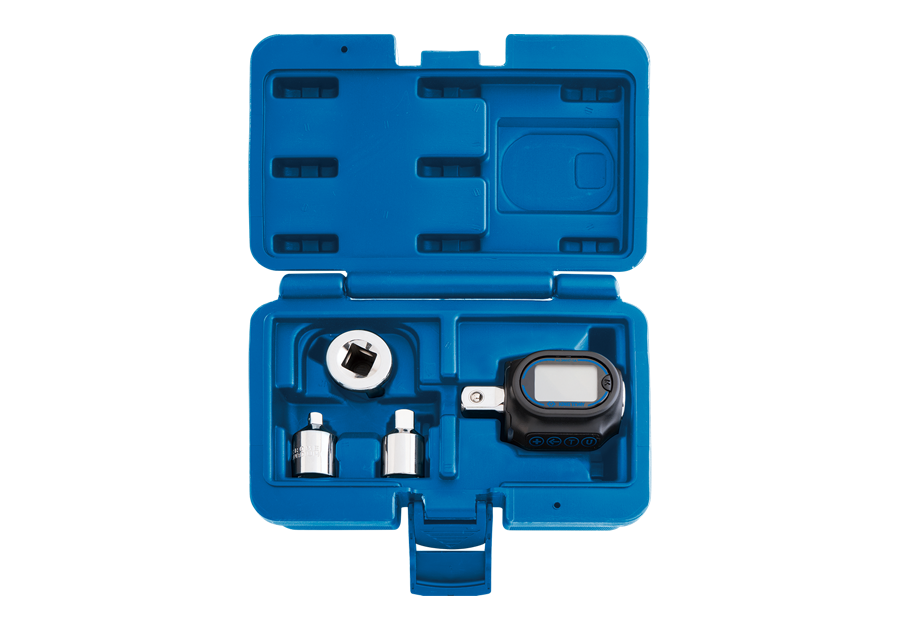
Digital Angle Adapter
34417-1A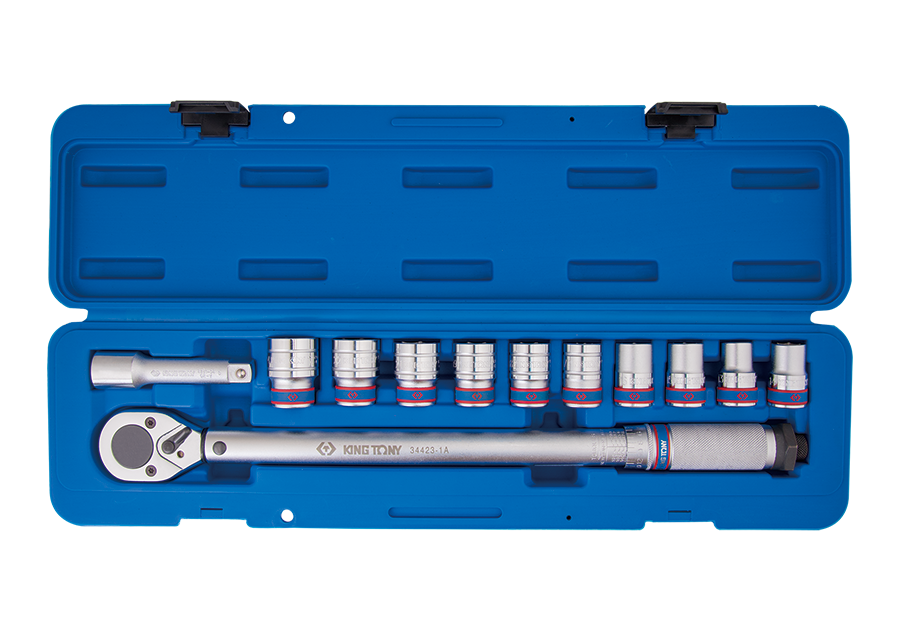
12 PC. Adjustable Torque Wrench Set
344251A12MR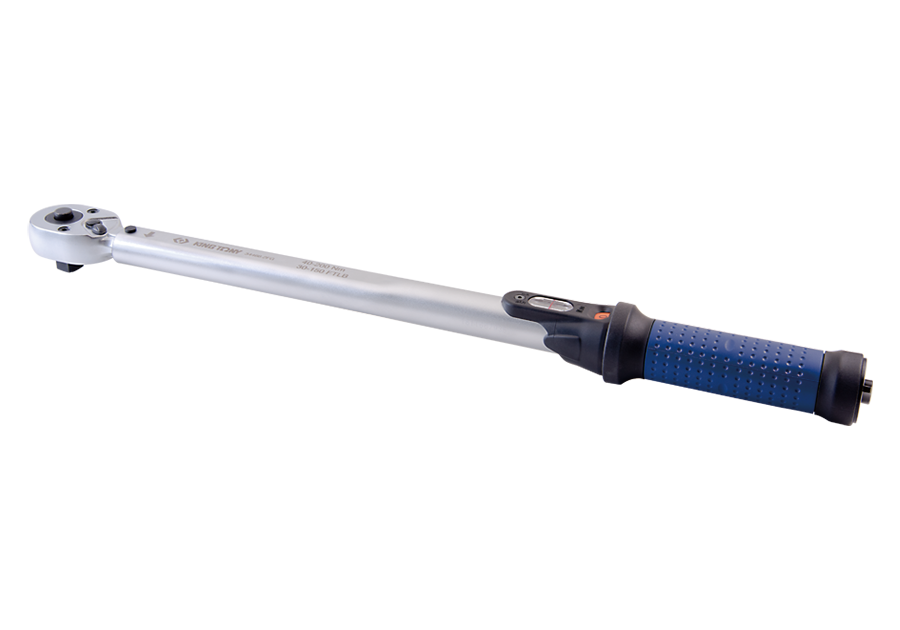
Window Type Adjustable Torque Wrench (Newton Meter & English)
34466-FG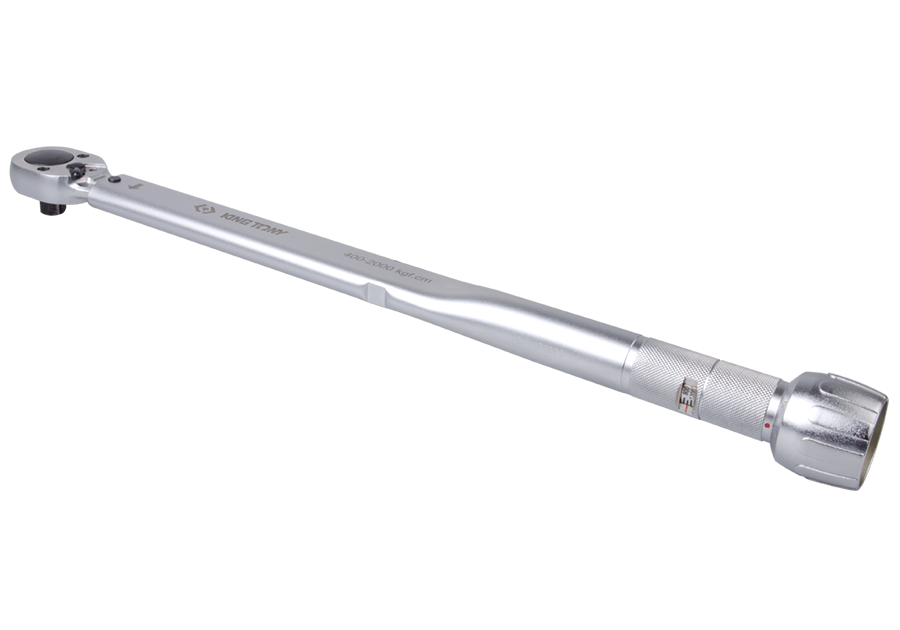
Click Type Adjustable Torque Wrench (Kilogram)
3442F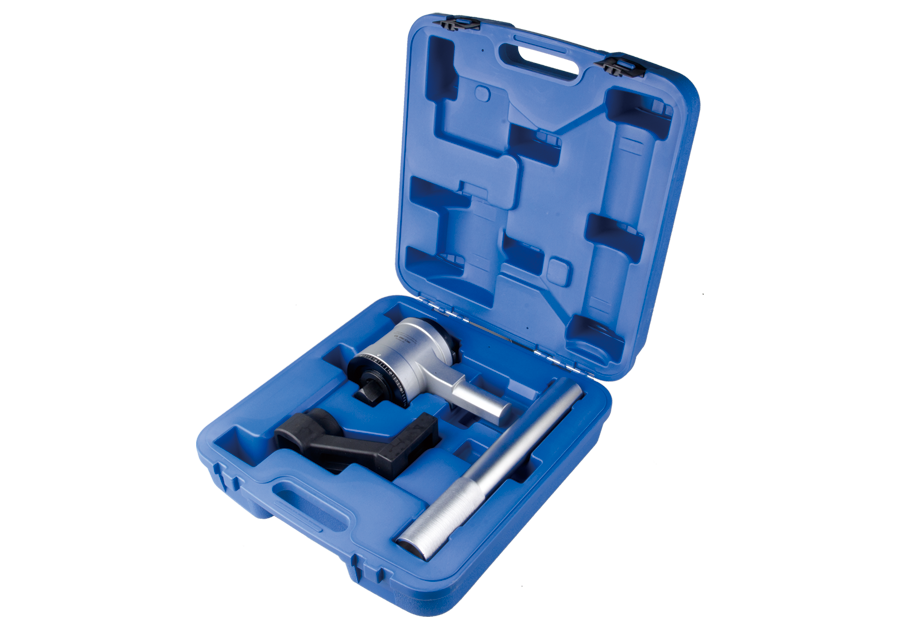
Torque Multiplier(1/2"F x 1"M)
34488-26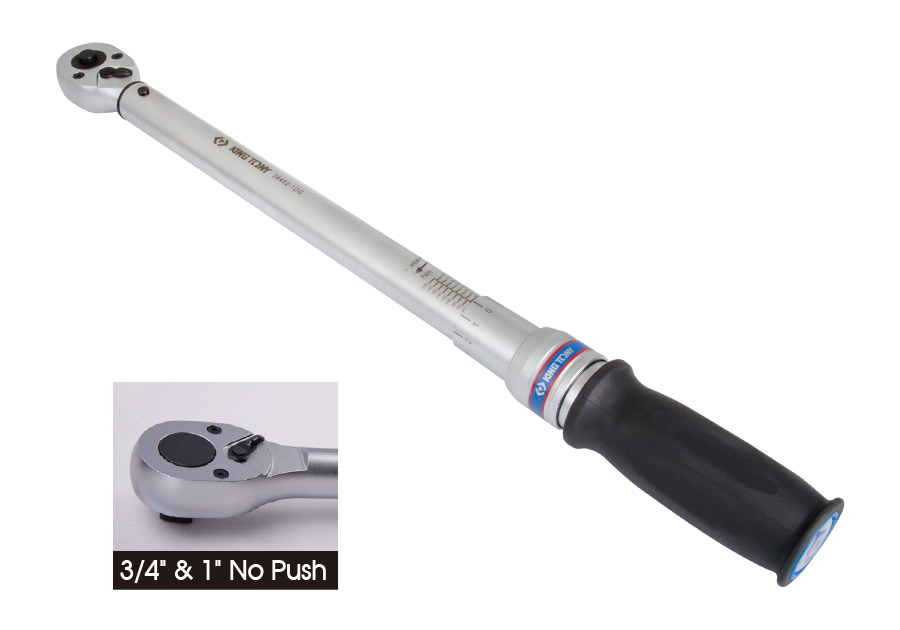
Heavy Duty Adjustable Torque Wrench (Newton Meter)
34462-DG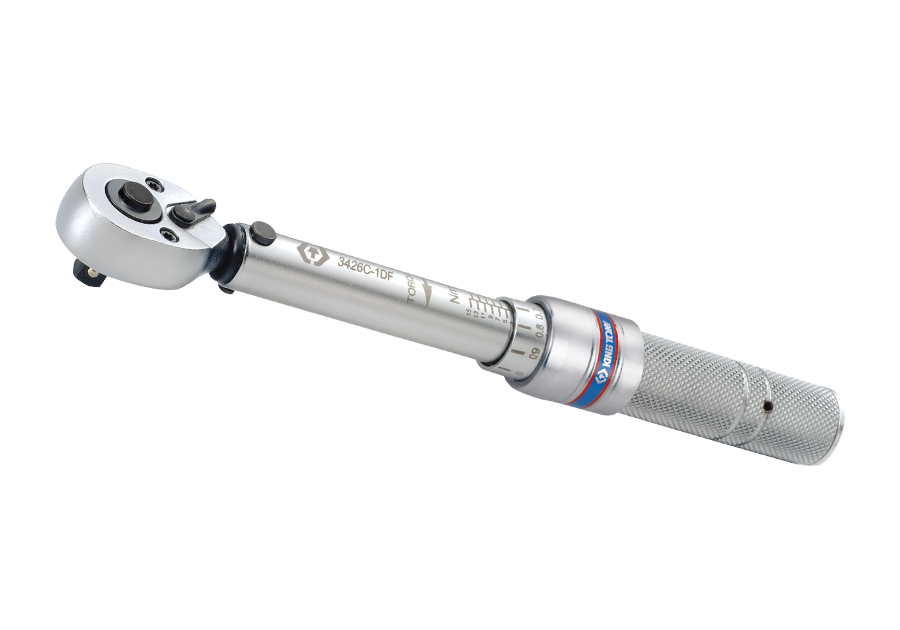
Mini-type Heavy Duty Torque Wrench (Newton Meter)
3426C-DF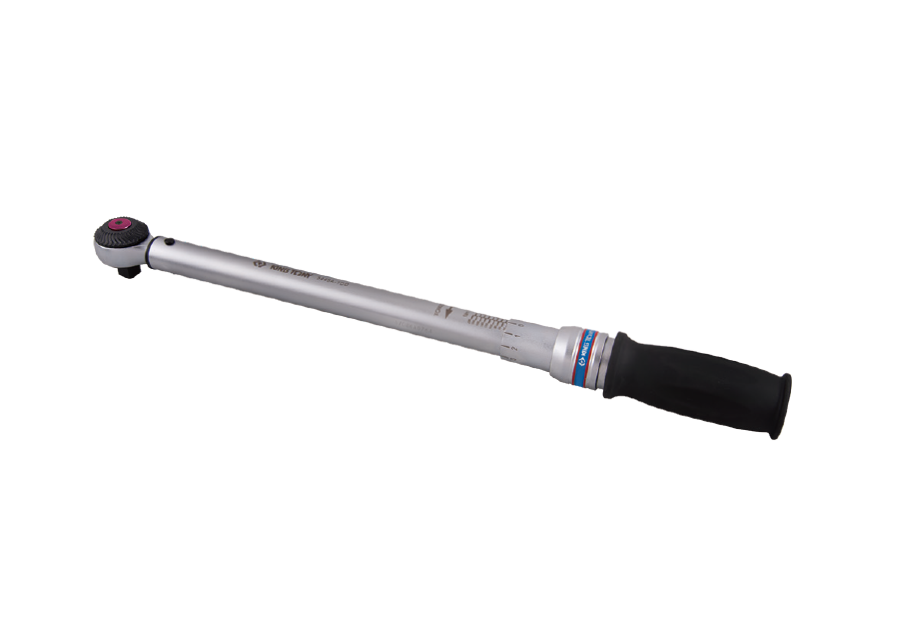
72PT Heavy Duty Adjustable Torque Wrench (Newton Meter)
3446A-DG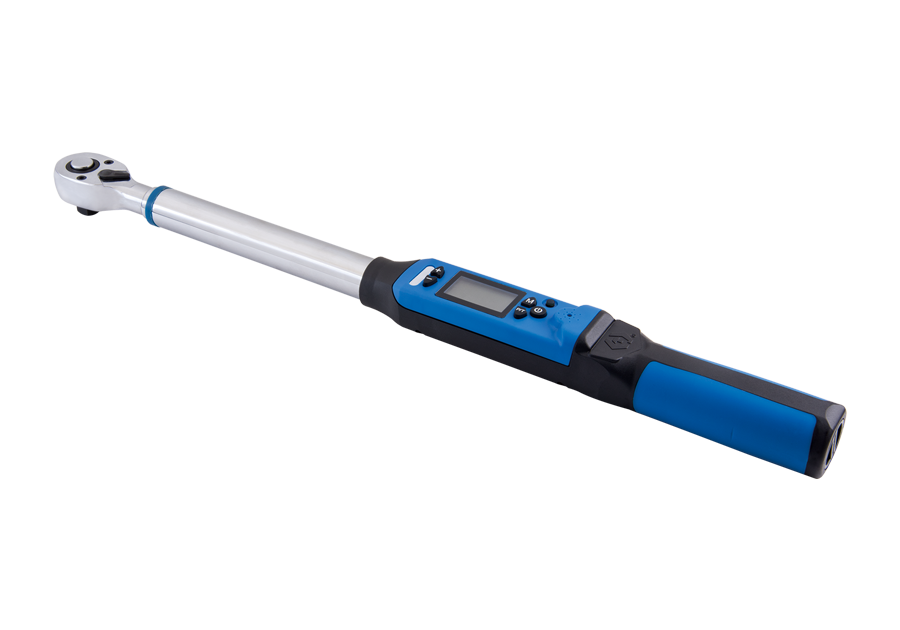
Electronic Torque Wrench
34467-AG